20% Annual Yield & Bi-Monthly Payouts? A Deep Dive into Brompton’s New "Cash Machine": PAYG ETF
20% Annual Yield & Bi-Monthly Payouts? A Deep Dive into Brompton’s New "Cash Machine": PAYG ETF
Hello everyone, and welcome back to the blog!
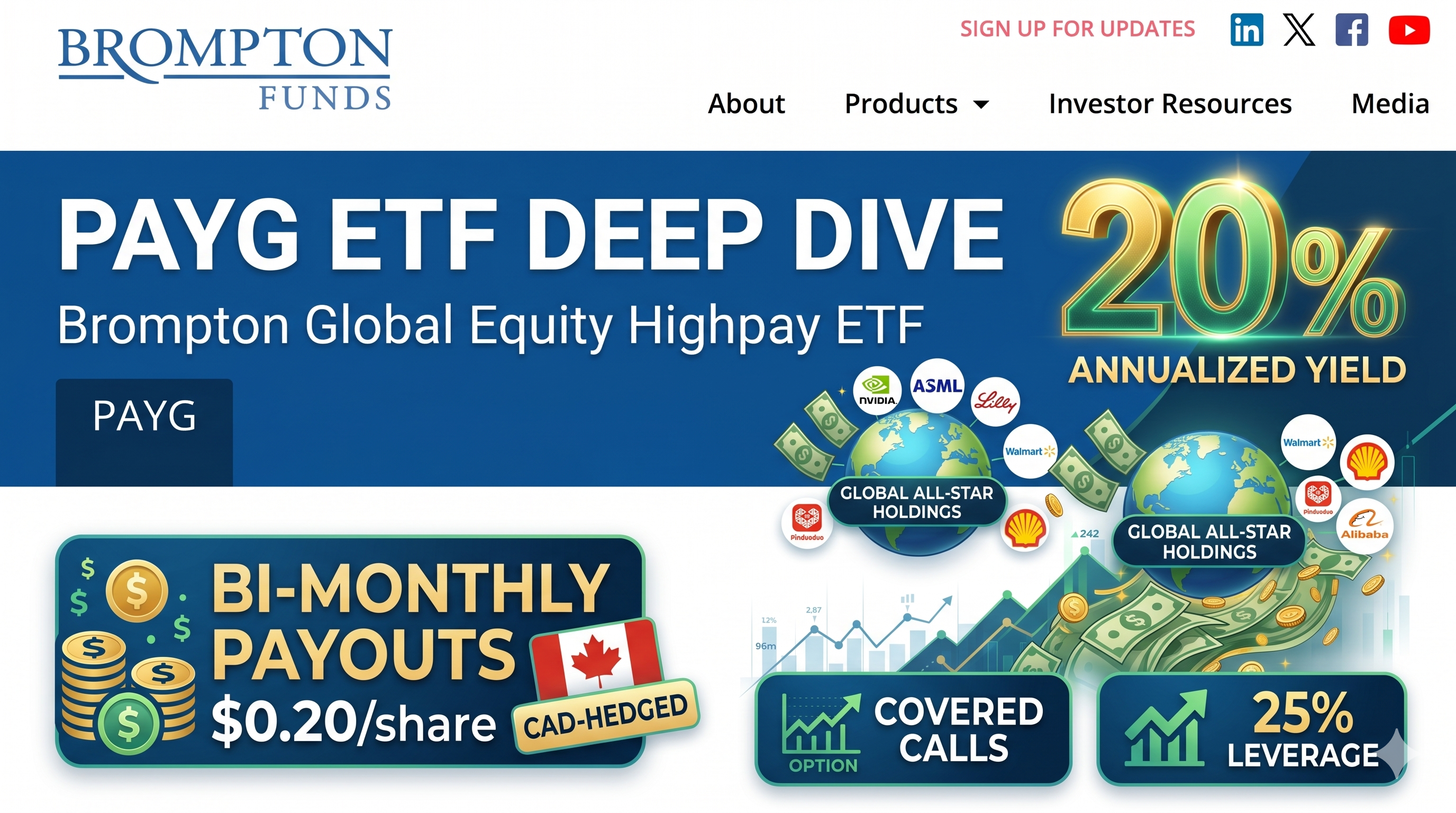
Recently, a friend reached out and told me that Brompton has launched a brand-new ETF called PAYG. When I first saw its distribution structure, I was incredibly curious—and a bit skeptical. This fund actually pays out twice every single month, with each distribution sitting at $0.20 CAD per share.
If you calculate that based on the initial offering price of $25, the annualized dividend yield comes out to a staggering 20%. In our current economic environment, a payout level like that is a total head-turner. After doing my own research, I’ve made a move: I am officially replacing my holding of Evolve’s INTY with this new PAYG.
Today, let’s take a systematic look at what exactly makes this fund so special.
I. The Basic Facts: What is PAYG?
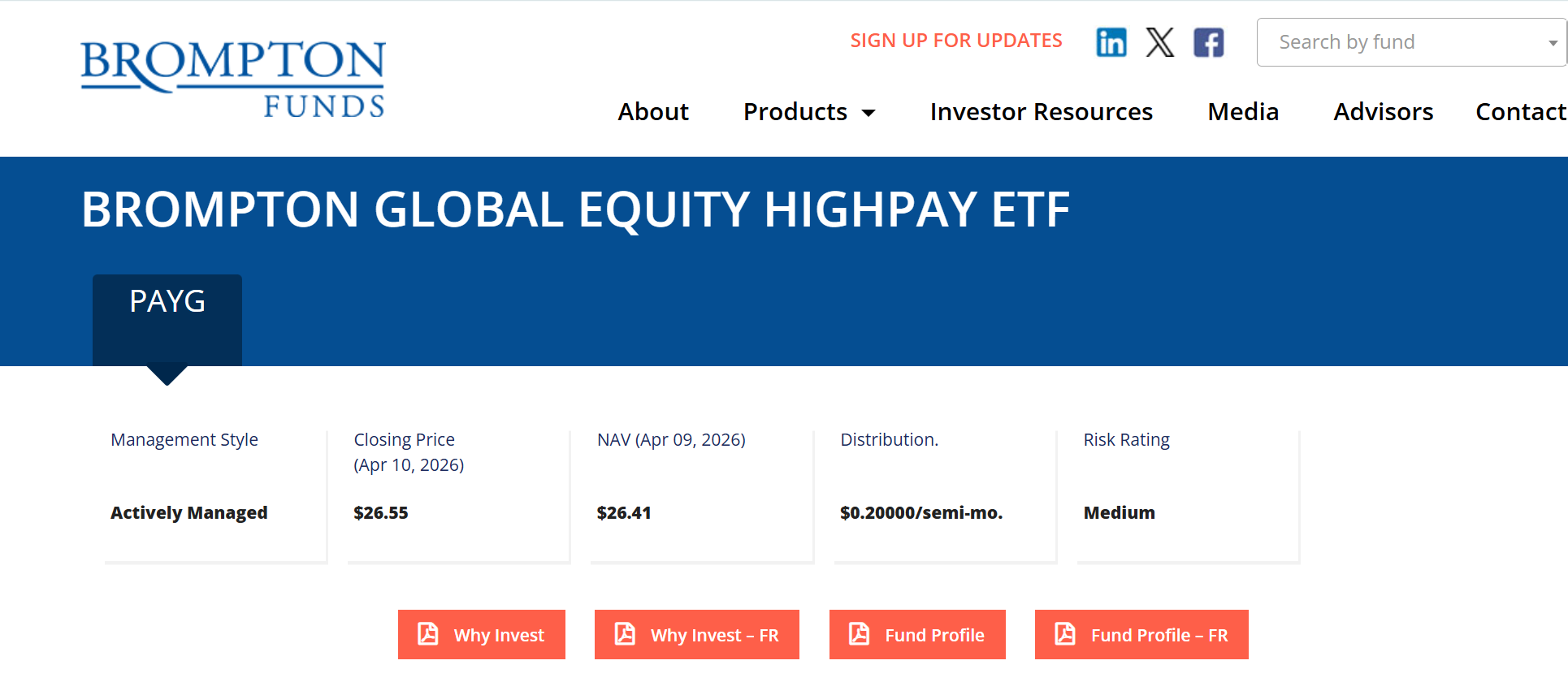
PAYG (Brompton Global All-Star High Income ETF) was officially launched on March 30, 2026, and is managed by Brompton Funds Limited. It is an actively managed fund designed to achieve the dual goals of capital appreciation and high-frequency distributions.
Key Fund Details:
| Feature | Details |
|---|---|
| Management Fee | 0.60% (Very reasonable for an active high-income fund) |
| Currency Strategy | CAD-Hedged |
| Payout Frequency | Bi-monthly (Twice a month) |
| Account Eligibility | Fully eligible for TFSA, RRSP, and taxable accounts |
Why is the CAD-Hedged strategy important? For those of us investing in Canada, this is crucial. It helps us avoid the uncertainty of exchange rate fluctuations, ensuring our returns more closely reflect the performance of the underlying global assets rather than the swings of the Loonie.
II. The Strategy: How Do They Get to 20%?
PAYG achieves its high-distribution goals through two core methods:
- Covered Call Strategy: The fund sells call options on its holdings to collect premium income. This provides a steady stream of cash flow regardless of whether the market is moving sideways.
- Modest Leverage: The fund maintains a leverage ratio of approximately 25% to modestly amplify the returns of the underlying assets.
This specific combination of premiums and leverage allows PAYG’s distribution capacity to be much higher than your typical high-dividend fund.
III. The Portfolio: A Global All-Star Lineup
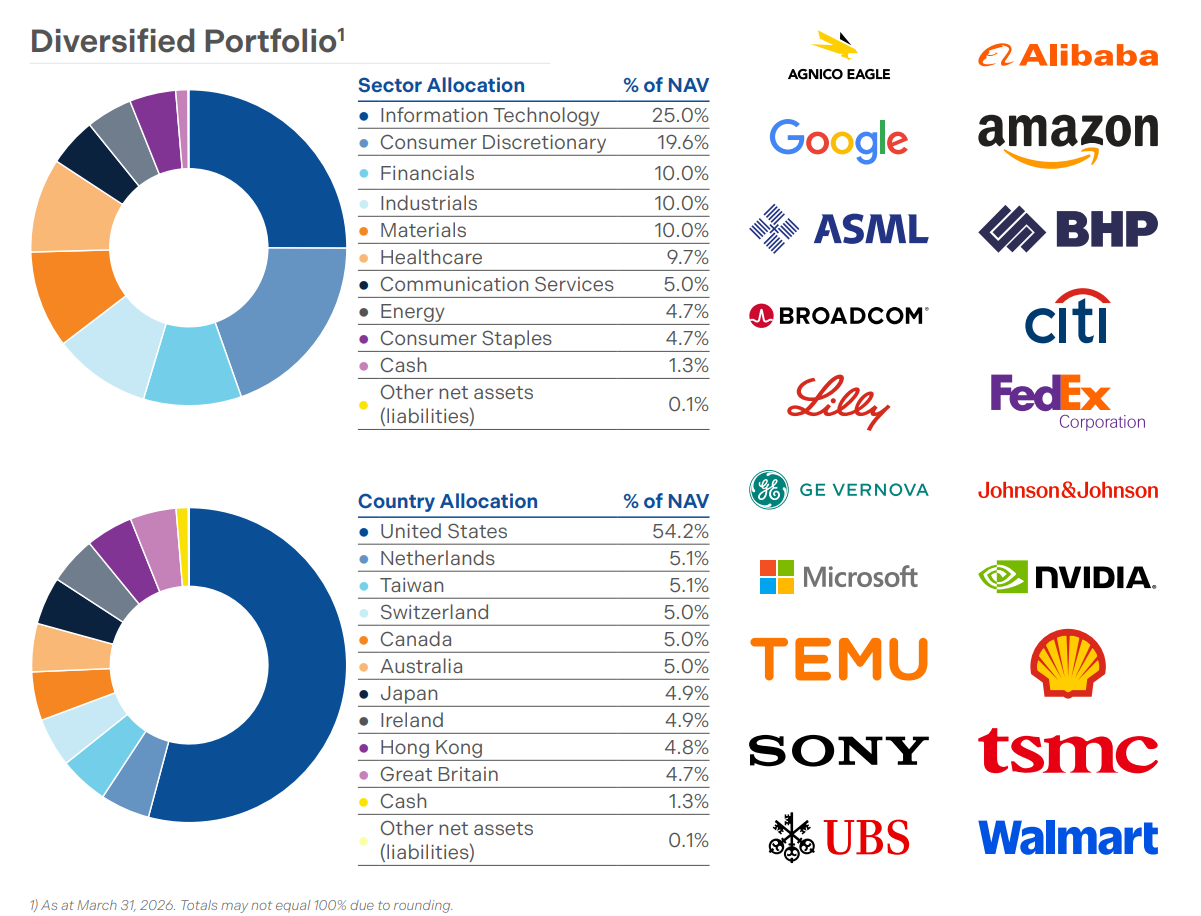
When choosing an ETF, you have to look at the holdings. PAYG’s portfolio is a classic global all-star mix, balancing growth and defensiveness.
1. Growth: Semiconductors & AI
- Holdings: ASML, TSMC, Broadcom, and NVIDIA.
- Logic: These companies essentially control the global AI computing power and chip ecosystem.
2. Defensive: Healthcare & Consumer Staples
- Holdings: Johnson & Johnson, Walmart, and Eli Lilly.
- Logic: These provide stability during economic volatility. Notably, Eli Lilly’s leadership in the weight-loss drug market makes it a rare growth powerhouse outside of the tech sector.
3. Energy & Resources: Inflation Protection
- Holdings: GE Vernova, BHP, Agnico Eagle Mines, and Shell.
- Logic: These assets act as a natural hedge against inflation and energy price spikes.
4. Strategic Contrarian Plays
- Holdings: Pinduoduo (PDD) and Alibaba.
- Logic: These Chinese tech giants currently have suppressed valuations. Their higher volatility actually helps the fund generate higher premium income through its option strategy.
IV. Historical Backtesting: Does it Hold Up?
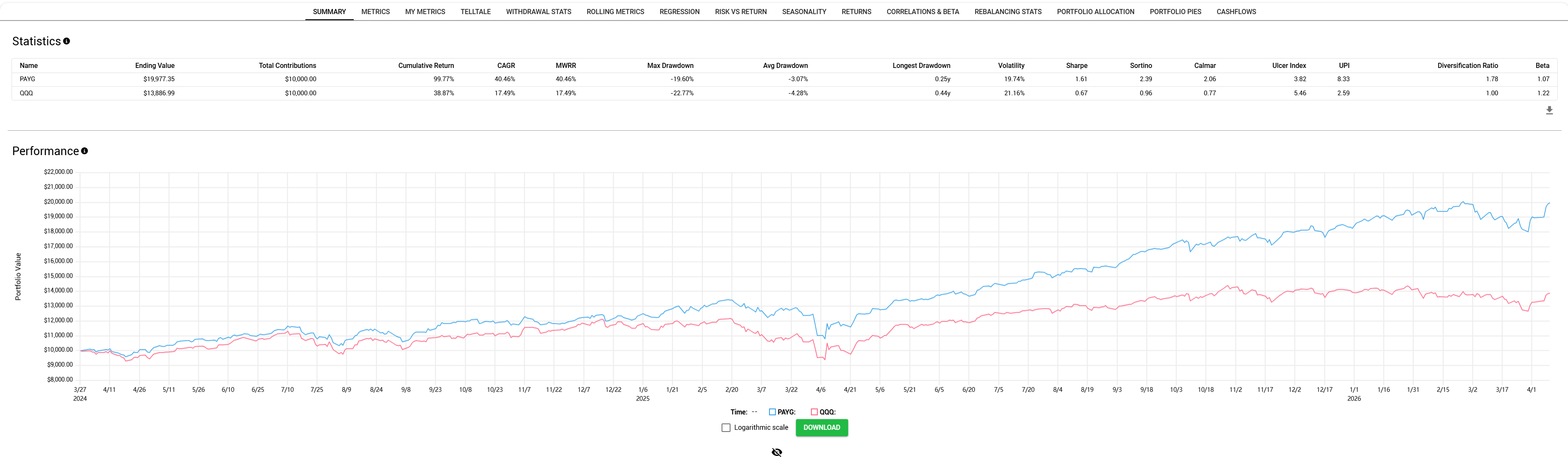
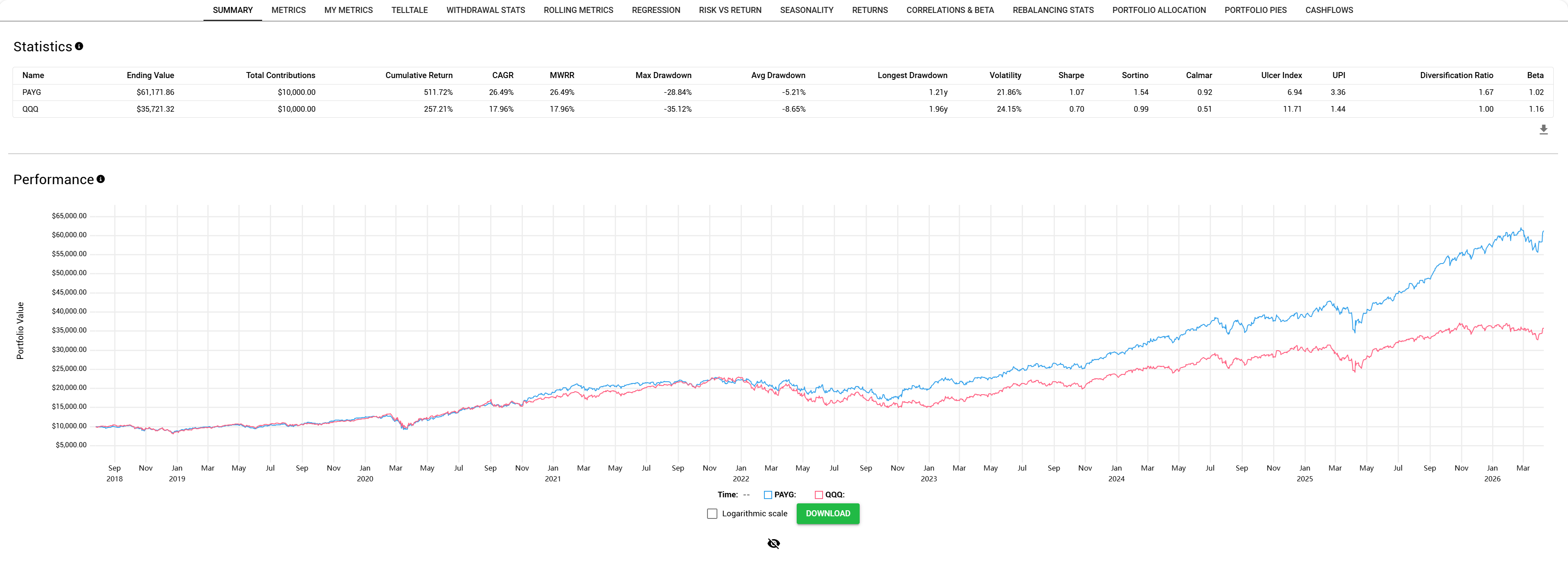
Looking at the backtesting results for this specific mix of assets:
- 2-Year Cumulative Return: 40.46%, which actually outperforms the Nasdaq (QQQ).
- Long-Term Backtest (8 Years): Approximately 26.49% annualized return.
- Max Drawdown: Lower than the Nasdaq over the same period.
The Math: PAYG writes call options that are 2% to 3% out-of-the-money with a coverage ratio of 40-45%. If the portfolio can maintain an average growth rate of ~26%, that upside potential is enough to cover the 20% dividend payout without eroding the Net Asset Value (NAV).
V. My Personal Strategy: The "Power Couple"
Since I am at a stage where I rely on dividends for living expenses, I’ve decided to pair ZEQT.T with PAYG.
- Why the Switch from INTY? While I like Evolve's products, I personally prefer Brompton’s approach. They are historically conservative with fund launches, and I have a higher level of confidence in their ability to maintain the NAV while paying out these high dividends.
- The Anchor (ZEQT.T): BMO’s ZEQT.T is my stable foundation. Its payout is capped at a sustainable 6%, which does an excellent job of protecting long-term value.
- The Income Booster (PAYG): PAYG provides the aggressive cash flow I need to meet my monthly expenses.
By holding these two together, I’m confident I can achieve a much healthier and more consistent boost to my overall monthly income without taking unnecessary risks with the core of my portfolio.
Final Thoughts
Risk and return are always relative. To get a 20% yield, you have to accept a concentrated portfolio and the use of leverage. However, if you are looking for a sophisticated, global income play, PAYG is one of the most interesting products to hit the Canadian market in 2026.
What are your thoughts on PAYG? Are you sticking with traditional dividend payers, or are you moving toward these high-yield covered call strategies? Let me know in the comments!
*Disclaimer: This post represents my personal investment choices and is not financial adv